


Why You Need a Specialized Real Estate Agent for New Builds in 2026
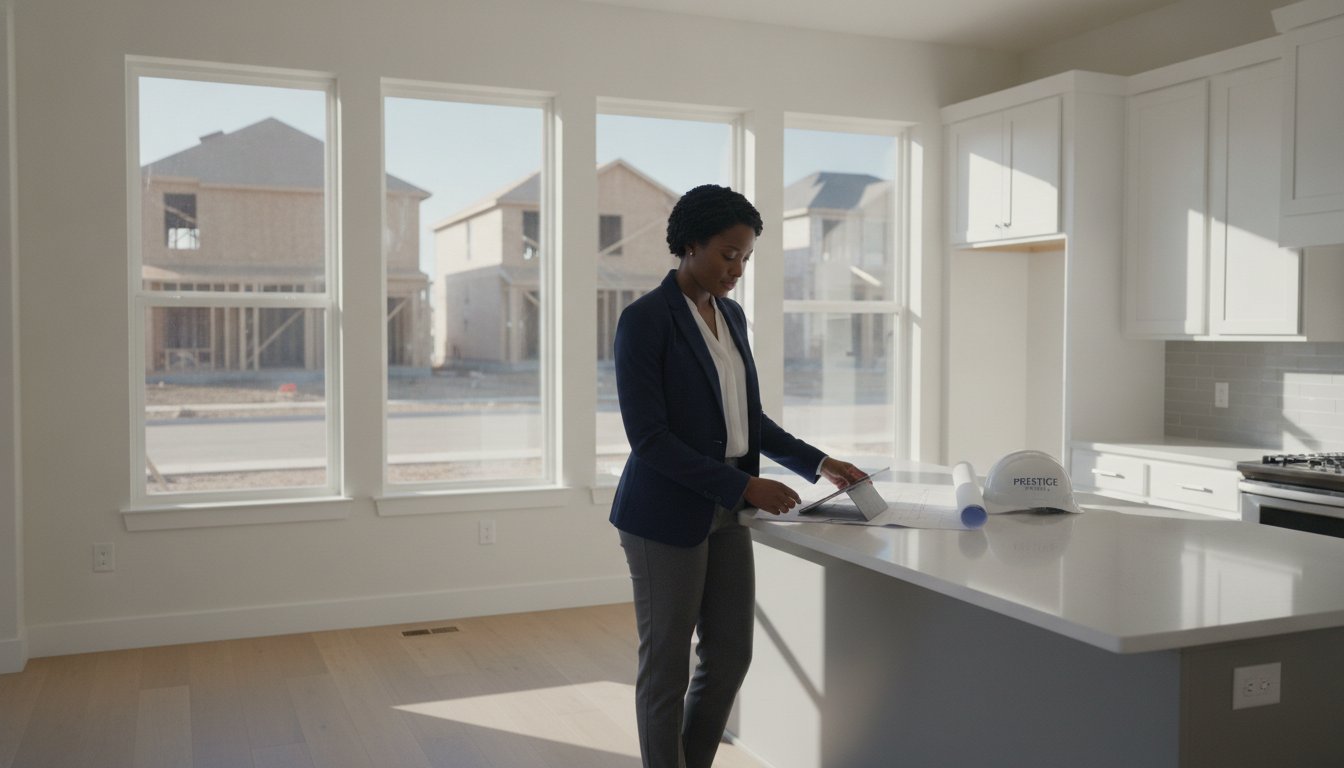
The builder's agent is not your agent. That distinction sounds simple, but it's the most expensive misunderstanding a new-construction buyer can make. When you walk into a model home and sign on with the on-site sales representative, you're working with someone whose loyalty, by design, belongs to the builder. Having a dedicated real estate agent for new builds in your corner changes everything about that dynamic.
If you've been wondering whether you really need your own representation when buying directly from a builder, you're not alone. It's one of the most common questions buyers ask, and the answer matters far more than most people realize. Lot premiums, upgrade allowances, contract contingencies, construction timelines, the details buried in a builder's purchase agreement can quietly cost you tens of thousands of dollars without the right expertise protecting your interests.
This article breaks down exactly why specialized buyer representation isn't just helpful in new construction, it's essential. You'll discover how an experienced advocate negotiates on your behalf, spots the red flags builders won't volunteer, and helps you maximize the long-term value of your investment from the day you sign to the moment you get your keys.
Key Takeaways
- The builder's on-site representative works exclusively for the seller — understanding this conflict of interest is the first step to protecting your investment in any new construction purchase.
- A skilled real estate agent for new builds knows which upgrades genuinely boost resale value and which lot premiums deserve a hard negotiation, saving you thousands before you ever break ground.
- Builder contracts contain escalation clauses, hidden cost provisions, and timeline language that can dramatically shift your financial exposure — expert contract review is non-negotiable.
- Third-party inspections at critical construction milestones, including pre-drywall walkthroughs, can uncover costly defects that a final inspection alone will never catch.
- The right representation doesn't just protect you from risk — it actively positions you to maximize the long-term value of your new home from contract signing to closing day.
Table of Contents
- The Builder's Representative vs. Your Advocate: Understanding the Conflict of Interest
- Strategic Negotiation: Securing Upgrades, Incentives, and Lot Premiums
- Navigating Complex Contracts: Hidden Costs in Production and Custom Builds
- The Build Cycle Phase: Managing Inspections and Construction Milestones
- Partnering with The Fortune Group: Elite Guidance for Your New Home
The Builder's Representative vs. Your Advocate: Understanding the Conflict of Interest
Walk into any model home on a Saturday afternoon and you'll be greeted by a polished, knowledgeable sales representative who knows the floor plans inside and out. They're friendly, helpful, and genuinely enthusiastic about the community. What they are not, under any circumstances, is your advocate. The builder's on-site representative is a dedicated employee of the seller, compensated to close deals at the best possible price and terms for the developer. That's not a criticism; it's simply the reality of how new construction sales work.
Understanding real estate agent roles and fiduciary responsibilities makes this distinction crystal clear. A seller's representative owes their loyalty to the seller. Full stop. When you're sitting across the table from a builder's agent without your own representation, you're negotiating against someone who has reviewed hundreds of contracts, knows exactly where the builder will flex, and is professionally motivated to protect every dollar of margin on that sale.
Why the Builder's Sales Team Prioritizes the Developer
Production builders operate on volume. Their business model depends on selling homes efficiently at consistent margins, which means the on-site team is structured to support that goal, not yours. Site agents are typically discouraged from volunteering information about price reductions, lot premium flexibility, or upgrade package negotiations that could erode the builder's bottom line. The widely circulated idea that going without an agent earns you a discount is, in most cases, a myth. Builders price their homes to the market, and the commission budget is built into that pricing whether you bring representation or not. You simply lose the advocate without recouping the savings.
Fiduciary Duty: Your Agent's Legal Obligation to You
This is where a dedicated real estate agent for new builds fundamentally changes your position. Fiduciary duty, in the context of new construction advocacy, means your agent is legally bound to prioritize your financial interests above all others, including their own. That encompasses the duty of loyalty, full disclosure of any material facts, and strict confidentiality around your negotiating position.
An independent buyer's agent will evaluate the builder's reputation, financial stability, and construction track record before you commit a single dollar. At The Fortune Group, that kind of diligence is built into every new-construction engagement, drawing on more than 20 years of experience working with both national production builders and boutique custom firms. That depth of knowledge means your advocate already knows which builders consistently deliver and which ones have a pattern of warranty disputes or timeline delays.
Experienced real estate agents for new builds also bring something the on-site team simply cannot: objectivity. They have no stake in whether you choose this community or the one across town. Their only goal is finding the right fit for your life and your investment.
Strategic Negotiation: Securing Upgrades, Incentives, and Lot Premiums
Negotiating with a production builder isn't like haggling over a resale home. The rules are different, the leverage points are less obvious, and the money at stake is often hiding in plain sight. A skilled real estate agent for new builds knows exactly where to apply pressure and, just as importantly, where not to.
Lot premiums are one of the first places that expertise pays off. Builders assign premium pricing to lots with water views, cul-de-sac positions, or backing to conservation land, and those prices are frequently negotiable, especially on lots that have sat unsold through multiple sales phases. An experienced advocate reviews comparable lot sales within the same community, benchmarks the premium against genuine resale lift, and pushes back with data rather than hope. Sometimes the premium is entirely justified. Often it isn't, and knowing the difference is worth real money at the closing table.
On the financing side, understanding homebuying costs and contracts is foundational before you ever sit down with a builder's preferred lender. Those in-house lenders frequently offer attractive rate buy-downs or closing cost credits, but those incentives are often contingent on using their financing exclusively. A knowledgeable agent will help you run a true apples-to-apples comparison against outside lenders so you're making a fully informed decision, not just chasing a headline number.
Maximizing the Design Center Experience
The design center visit feels exciting. It's also where buyers quietly overspend. Structural changes like adding a bedroom, extending a lanai, or upgrading the electrical panel are worth prioritizing because they can't be added cost-effectively after closing. Cosmetic finishes like cabinet hardware and tile selections are far easier to swap out later. Your agent's job is to keep that distinction sharp when the design consultant is enthusiastically walking you toward premium countertop packages. Avoiding the over-improvement trap means balancing what you love with what the neighborhood's resale ceiling will actually support.
Winning the Incentive Game
Builder "flex cash" is real, and it's deployable in ways most buyers never discover on their own. Depending on the developer's fiscal quarter and their current inventory pressure, that flexibility might translate into upgraded appliance packages, extended rate lock periods, or contributions toward closing costs. The timing of your contract matters significantly; builders are often more motivated to negotiate at the end of a sales quarter when they're managing absorption targets.
This is also where The Fortune Group's Lifestyle-Based Property Search approach adds a dimension that pure price negotiation misses entirely. Securing a great deal on a home in a community whose amenities don't align with how you actually live creates a different kind of financial risk over time. Whether you're drawn to active golf communities, pickleball-centric neighborhoods, or master-planned developments with resort-style amenities, matching the community to your lifestyle protects both your enjoyment and your long-term investment value. Explore how that kind of personalized search changes the new-construction conversation at The Fortune Group's buyer representation services.
Navigating Complex Contracts: Hidden Costs in Production and Custom Builds
Builder contracts are not standard real estate contracts. That distinction alone justifies having a dedicated real estate agent for new builds at your side before you ever uncap a pen. Production builders use proprietary agreements drafted by their legal teams, optimized to protect the developer's interests across hundreds of simultaneous transactions. Custom build contracts are an entirely different animal, longer, more negotiable, and far more consequential when the language is vague. Knowing which type of contract you're signing changes everything about how you protect yourself.
One of the most misunderstood clauses in any new construction agreement involves "substantial completion." Builders define this term to mean the home is livable by their standards, not necessarily yours. Punch-list items, landscaping, and community amenity completion may all fall outside that definition. The gap between substantial completion and your actual, comfortable move-in date can stretch weeks or months, and if your contract doesn't address it precisely, your leverage to push back essentially disappears after you close. The Consumer Financial Protection Bureau's home buying guidance reinforces why understanding every contractual term before signing is foundational to protecting your financial position.
Production Builders: Navigating the 'Take It or Leave It' Contract
National production builders present their contracts as fixed documents. They're not entirely fixed, but you need to know where to push. The clauses that catch buyers off guard most often include:
- Escalation clauses: Some agreements allow builders to pass along material cost increases to the buyer under specific conditions. The trigger language matters enormously, and vague wording creates real financial exposure.
- Earnest money provisions: Production builder deposits are frequently non-refundable after a defined period, sometimes as short as ten days. Understanding exactly what triggers forfeiture protects a deposit that can represent a significant sum.
- Impact fees and utility hookups: These costs are often listed as buyer responsibilities in the fine print. They're not always disclosed prominently during the sales presentation, and they can add meaningful dollars to your true closing costs.
Custom Builds: Protecting Your Vision and Your Budget
Custom agreements demand an even sharper eye. The scope of work definition is everything. Vague language around finish allowances is where budgets quietly collapse. If a contract specifies a flooring allowance without tying it to a realistic per-square-foot figure for the quality tier you've discussed, you'll be writing change-order checks before the foundation cures. Experienced agents who work with luxury home builders know to vet the builder's track record on allowance accuracy before a single line is signed.
Preventing change-order fatigue starts with specificity at the contract stage. Every finish selection, structural detail, and timeline milestone should be documented with enough precision that "we discussed it" never becomes a dispute. Your agent's role here is part contract reviewer, part project advocate, ensuring your vision survives the gap between the design meeting and the construction site.
The Build Cycle Phase: Managing Inspections and Construction Milestones
Signing the contract is the beginning, not the finish line. For most buyers, the six to twelve months between contract execution and closing day represent the highest-risk window of the entire transaction, and it's the phase where having a dedicated real estate agent for new builds delivers some of its most tangible value. Competitors will tell you your agent "pushes for a proper inspection." That's a significant undersell. What expert representation actually looks like during the build cycle is active, structured, and relentless.
According to The Fortune Group's new construction timeline guide, the average new home build in 2026 runs between seven and fourteen months from permit issuance to certificate of occupancy, depending on the builder's production volume, local permitting pace, and the complexity of the home's design. Every one of those months is a window for something to go right or wrong, and your agent's job is to make sure you know which is happening.
The Three Critical Inspection Stages
New construction demands a layered inspection strategy, not a single walkthrough at the end. Each stage targets vulnerabilities that later construction phases will permanently conceal.
- Foundation and framing: This is the most consequential inspection window. Structural errors, improper load-bearing placements, and framing deviations from the approved plans are virtually impossible to remediate after drywall goes up. Catching them here costs almost nothing to fix. Catching them later can cost everything.
- Mechanical, electrical, and plumbing rough-in: Before insulation and drywall seal the walls, a licensed third-party inspector verifies that HVAC ductwork, electrical panel sizing, and plumbing lines meet code and match the approved specifications. This isn't the builder's inspector. It's yours.
- Final punch list walkthrough: This is where details get documented in writing. Incomplete trim work, paint inconsistencies, appliance installation gaps, and landscaping deficiencies all go on a formal list that the builder is contractually obligated to address before closing. Your agent attends this walkthrough with you and knows which items to push on hardest.
The New Construction Timeline: What to Expect
Your agent doesn't just attend milestones. They track them proactively. Permitting delays, material backlogs, and subcontractor scheduling conflicts are all common sources of timeline slippage, and builders don't always volunteer that information promptly. A skilled advocate maintains regular communication with the site superintendent, flags delays early, and documents them in writing. That documentation matters if a delay triggers a rate lock expiration or conflicts with a lease end date.
When timelines slip, the advocacy doesn't stop at asking politely. Depending on what your contract specifies around completion dates, there may be legitimate grounds to negotiate compensation for extended carrying costs or to revisit terms. That's a conversation that requires someone who knows the contract language cold and has the professional standing to have it without jeopardizing the relationship with the builder.
Ready to have an expert in your corner from groundbreaking to closing day? Connect with The Fortune Group's new construction buyer representation team and put two decades of build-cycle experience to work for you.
Partnering with The Fortune Group: Elite Guidance for Your New Home
Everything covered in this article, the contract traps, the inspection milestones, the negotiation leverage points, only matters if the person sitting across from the builder's team actually knows how to use it. That's the real question when choosing a real estate agent for new builds: not just who understands the process in theory, but who has done it enough times, with enough builders, across enough market cycles, to act decisively when it counts.
Patti Fortune brings more than 20 years of hands-on experience representing buyers with national production builders and boutique custom firms. That depth isn't a credential on a website. It's the difference between an agent who reads a builder's contract and one who recognizes a problematic escalation clause on sight because she's negotiated around it before. High-stakes situations demand that kind of seasoned intuition, and The Fortune Group delivers it with an energy and positivity that keeps the process moving forward even when complications arise.
A Seasoned Approach to Luxury New Construction
Well-connected advocacy opens doors that most buyers never know exist. Builder relationships built over two decades mean The Fortune Group often has visibility into upcoming inventory, phase releases, and lot availability before they hit the general market. That access matters in competitive communities where the best lots and floor plans move quickly. Every client engagement is handled with complete discretion, protecting your negotiating position and your privacy from the first conversation through closing day.
The Fortune Group operates within the Downing-Frye Realty network, one of Southwest Florida's most respected independent brokerages. That affiliation provides the infrastructure of a sophisticated real estate firm while preserving the personalized, relationship-first approach that defines every Fortune Group transaction. You get elite resources and a team that actually knows your name.
For buyers drawn to golf communities, pickleball-centric neighborhoods, or resort-style master-planned developments, the Lifestyle-Based Property Search is where the process truly differentiates itself. Matching your daily life to the right community isn't a soft consideration; it's a long-term investment decision. A home in the wrong community, regardless of how well it was negotiated, creates a different kind of financial risk over time. The Fortune Group's approach ensures the community fits before the contract is signed.
Start Your New Build Journey Today
One step matters above all others: register your agent before your first builder visit. Once you've toured a model home unrepresented, most builders consider you their direct client, and adding representation afterward becomes complicated. Protect your position from day one.
- Contact The Fortune Group before visiting any model home or builder sales office
- Share your lifestyle priorities so the search is built around how you actually live
- Let an experienced advocate handle every builder interaction from that point forward
Ready to put two decades of new-construction expertise to work for you? Contact The Fortune Group for expert new construction representation and start your search the right way.
Your New Build Deserves an Expert in Your Corner
Buying new construction without dedicated representation is one of the most costly assumptions a buyer can make. A skilled real estate agent for new builds protects you at every stage: from decoding builder contracts and negotiating lot premiums to managing inspection milestones and ensuring your community actually fits your life. These aren't minor conveniences; they're the difference between a transaction that works for you and one that quietly works against you.
The Fortune Group brings 20+ years of specialized experience representing buyers across elite golf communities, pickleball-centric neighborhoods, and luxury custom builds. That depth of knowledge means your advocate has seen the contract clauses, the builder tactics, and the construction pitfalls before you ever encounter them.
Don't walk into a model home without someone in your corner. Secure your expert new construction advocate today and start your new build journey with the confidence that comes from having a seasoned, passionate team protecting your investment every step of the way.
Frequently Asked Questions About Using a Real Estate Agent for New Builds
Do I really need a real estate agent for new construction?
Yes, and the stakes are higher than most buyers expect. Builder contracts are proprietary documents drafted to protect the developer, not you. Without dedicated representation, you're negotiating against a sales team that closes hundreds of transactions a year using agreements you've likely never seen before. An experienced buyer's agent brings contract fluency, builder knowledge, and legal fiduciary duty to your side of the table.
The common assumption that you'll save money by going unrepresented rarely holds up. Builders price commission into their homes regardless of whether you bring an agent. You simply lose the advocacy without recovering the cost.
Does the builder charge more if I use a real estate agent?
No. Production builders build buyer's agent commissions into their pricing structure as a standard cost of doing business. The home's price doesn't increase because you brought representation. What changes is who advocates for your interests during negotiation, contract review, and the build cycle. Skipping an agent doesn't lower your purchase price; it just removes your advocate from the transaction.
Can I use my own agent if I've already visited the model home alone?
This is one of the most time-sensitive issues in new construction. Most builders have a registration policy that designates you as their direct client once you've toured a model home unrepresented, which can complicate or entirely prevent adding a buyer's agent afterward. The policy varies by builder, but the window closes faster than most buyers realize. Contacting your agent before your first model home visit is the single most important step you can take to protect your representation rights.
How do real estate agents get paid for new construction?
In most new construction transactions, the builder pays the buyer's agent commission directly at closing. This is a pre-negotiated arrangement between the builder and cooperating brokerages, and it doesn't come out of your pocket or inflate your purchase price. Your agent's compensation is already factored into the builder's cost structure. The practical result is that you receive full professional representation at no direct cost to you as the buyer.
What should I ask a real estate agent before hiring them for a new build?
Ask specifically how many new construction transactions they've closed, which builders they've worked with, and whether they've handled both production and custom build agreements. Generic real estate experience doesn't automatically translate to new construction expertise. You want someone who recognizes problematic contract language on sight, has existing relationships with local builders, and understands how construction timelines interact with rate locks and lease expirations.
It's also worth asking how they handle the build cycle between contract signing and closing. A skilled real estate agent for new builds doesn't disappear after you sign; they track milestones, attend inspections, and maintain communication with the site superintendent throughout the entire process.
Can a real estate agent help me negotiate with a custom home builder?
Absolutely, and custom builds actually demand more negotiation expertise, not less. Finish allowances, scope of work definitions, change-order procedures, and completion timelines are all negotiable in a custom agreement, but vague language in any of those areas can quietly unravel your budget. An experienced agent who has worked with custom builders knows which allowance figures are realistic, which contract terms need tightening, and how to document your selections precisely enough to prevent disputes during construction.
What are the most important inspections for a new construction home?
Three inspection windows matter most, and each targets defects that later construction will permanently conceal. A foundation and framing inspection catches structural issues before drywall makes them inaccessible. A mechanical, electrical, and plumbing rough-in inspection verifies that systems meet code before insulation seals the walls. A final punch list walkthrough documents incomplete or defective work the builder must address before closing. All three should use a licensed third-party inspector, not the builder's own team.
How does an agent help with the design center and upgrade process?
A knowledgeable agent keeps your design center decisions grounded in resale reality. Structural upgrades, things like added rooms, extended outdoor living spaces, or electrical capacity increases, are worth prioritizing because they can't be added cost-effectively after closing. Cosmetic finishes are easier and cheaper to change later. Your agent's job is to help you distinguish between the two when a design consultant is enthusiastically presenting premium package after premium package, so you invest where it genuinely matters.
They'll also flag when your total upgrade spend is pushing past what the neighborhood's resale ceiling will support. Loving your home and making a sound investment aren't mutually exclusive, but keeping that balance requires someone who knows the local market well enough to draw the line.